
How to Choose Between Spur and Helical Gears for High-Speed & Low-Noise Machines?
Many mechanical designers constantly ask: are spur gears better than helical gears for transmission systems? The clear answer is that neither gear type holds universal superiority. The right selection depends entirely on mechanical constraints, operational conditions, failure mode tolerance, and core design priorities, rather than generalized performance rankings.
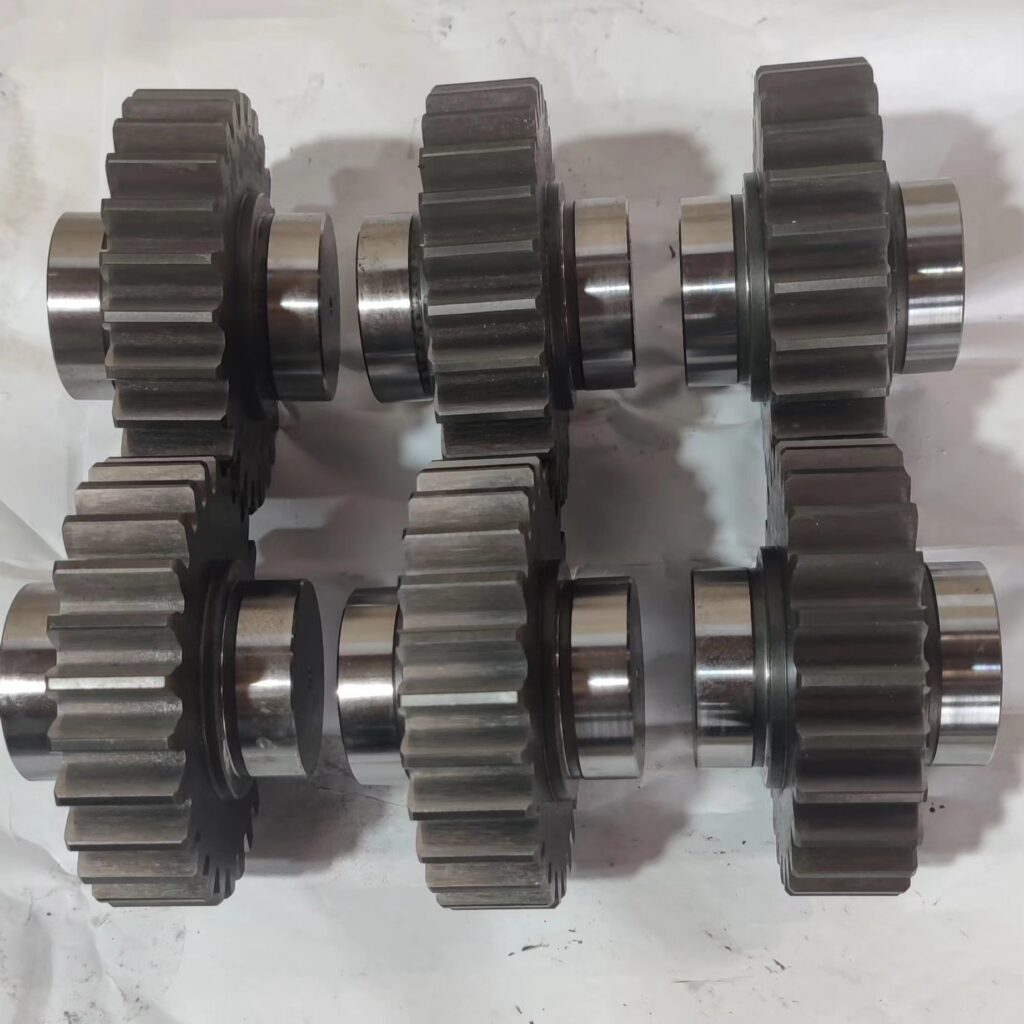
Spur gears stand as the optimal choice for specific industrial scenarios. Designed with straight teeth aligned parallel to the gear axis, they fit compact axial space layouts perfectly. These gears perform best at low rotating speeds below 1500 rpm and excel in environments with heavy shock loads. Boasting up to 99% mechanical efficiency and cost-effective manufacturing, spur gears are widely applied in simple transmission machinery. Their only prominent drawback is high operational noise, making them unsuitable for noise-sensitive equipment.
Helical gears feature angled teeth that enable gradual, smooth tooth engagement, solving the noise pain point of spur gears. They are mandatory for high-speed operations over 2000 rpm and projects with strict NVH (noise, vibration, and harshness) limits. With higher torque density and more stable transmission performance, helical gears suit precision and high-power mechanical systems. However, their structural design generates axial thrust, requiring additional thrust bearing installation and extra assembly space.
The core principle of gear transmission design is prioritizing non-negotiable constraints first. Designers must evaluate acoustic limits, spatial footprint, speed requirements, load conditions, and budget before finalizing gear selection. Matching gear types to actual mechanical demands effectively avoids premature failure and optimizes overall transmission system durability and cost performance.
spur vs helical gears, gear transmission design, industrial gear selection, spur gear applications, helical gear advantages, NVH gear performance, high speed transmission gears, mechanical gear failure modes, compact space gear design, industrial mechanical constraints