
What Are the Key Differences Between Spur and Helical Gearboxes for Industrial Drives?
Spur or helical gearbox? The “right” answer usually shows up on the shop floor—not in a textbook.
Choosing between a spur gearbox and a helical gearbox is one of the most common dilemmas for mechanical engineers and plant maintenance teams. While textbooks offer theoretical guidelines, the best gearbox selection always comes down to real-world shop-floor performance, focusing on noise, vibration, load capacity, efficiency, bearing lifespan, and overall operational cost.
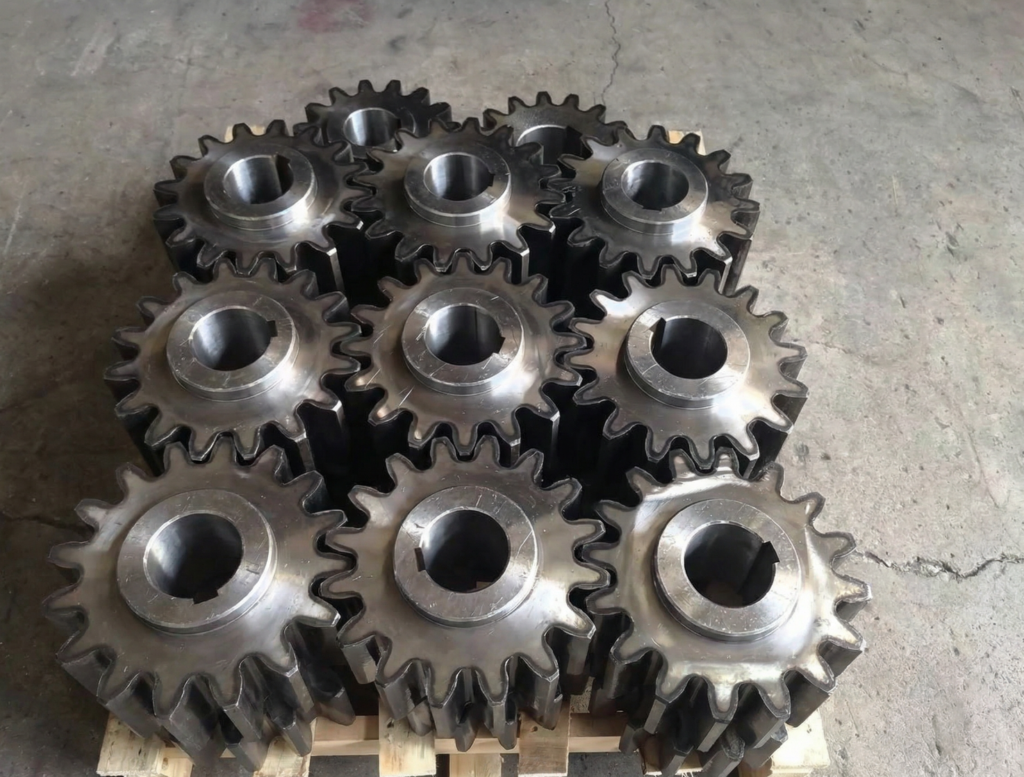
For industrial heavy-duty drive systems, noise and vibration are primary decision factors. Helical gearboxes feature progressive tooth engagement, which significantly reduces tonal noise and delivers smoother high-speed operation. This makes helical units the top choice for noise-sensitive production environments. In contrast, spur gearboxes use straight tooth contact, generating more noticeable vibration and noise, yet they remain fully viable for general industrial applications where quiet operation is not a priority.
Load density and mechanical packaging further differentiate the two designs. Helical gearboxes provide higher power density, making them ideal for compact, high-load industrial setups. However, their angled tooth structure creates continuous axial thrust, requiring reinforced bearings and robust housing structures to prevent premature bearing failure. Spur gearboxes produce no axial thrust, reducing bearing stress and simplifying structural design.
In terms of energy efficiency and thermal performance, spur gearboxes deliver marginally higher mesh efficiency. Most overall gearbox heat loss stems from bearing friction and oil churning rather than gear tooth contact, keeping spur designs efficient for standard-duty cycles. When it comes to cost and maintenance, spur gearboxes stand out with simpler construction, lower upfront costs, and easier routine servicing, while helical gearboxes demand stricter maintenance protocols.
Ultimately, the right gearbox depends on core project constraints: low noise for helical models, and cost-effectiveness plus simplicity for spur alternatives.
spur vs helical gearbox, helical gearbox advantages, spur gearbox benefits, heavy duty gearbox selection, industrial drive gearbox, gearbox noise reduction, gearbox bearing life, industrial gearbox efficiency, gearbox cost comparison, mechanical gearbox selection guide