
Why Does Heavy Machinery Gearbox Sludge Keep Forming Even With Regular Oil Changes?
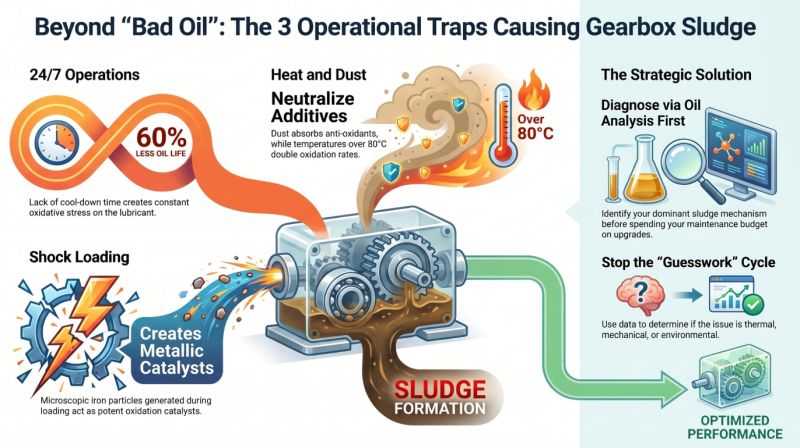
Many heavy‑equipment operators and maintenance teams struggle with persistent gearbox sludge, mistakenly blaming poor‑quality lubricant as the main culprit. In most real‑world field cases, sludge formation is seldom caused solely by “bad oil”. Instead, it stems from four common operational traps that accelerate lubricant degradation inside heavy‑machinery gearboxes.
First, non‑stop 24/7 operation leaves zero cool‑down cycles for gearbox assemblies. Continuous running builds sustained oxidative stress within the sump, and can shorten service oil life by as much as 60 percent. Second, repeated shock loading during production creates microscopic iron wear particles. These fine metal fragments work as powerful oxidation catalysts, speeding up oil breakdown and sediment generation.
Third, external dust ingression creates hidden damage. Sub‑micron environmental dust particles bypass standard breathers, contaminate gearbox interiors, and physically deplete critical anti‑oxidant additives from your lubricating oil. Fourth, trapped excess heat worsens chemical degradation. Once sump temperature rises above 80°C, gearbox oil oxidation rates double with every additional 10°C temperature increase. Combined heat, particle contamination and additive loss rapidly build thick sludge.
Guessing at solutions wastes valuable maintenance budget. Instead of jumping into component upgrades blindly, apply professional oil analysis to identify your dominant failure mechanism first. Oil‑lab test reports reveal whether your sludge issue comes from heat, particle contamination, shock wear or continuous‑run fatigue. Targeted maintenance actions based on test data deliver far better long‑term gearbox reliability for heavy‑duty machinery.
#GearboxSludge #HeavyMachineryMaintenance #IndustrialGearbox #LubricantDegradation #OilAnalysis #HeavyEquipmentLubrication #GearboxFailurePrevention #IndustrialEquipmentReliability #LubricantOxidation #MachineryMaintenanceTips