
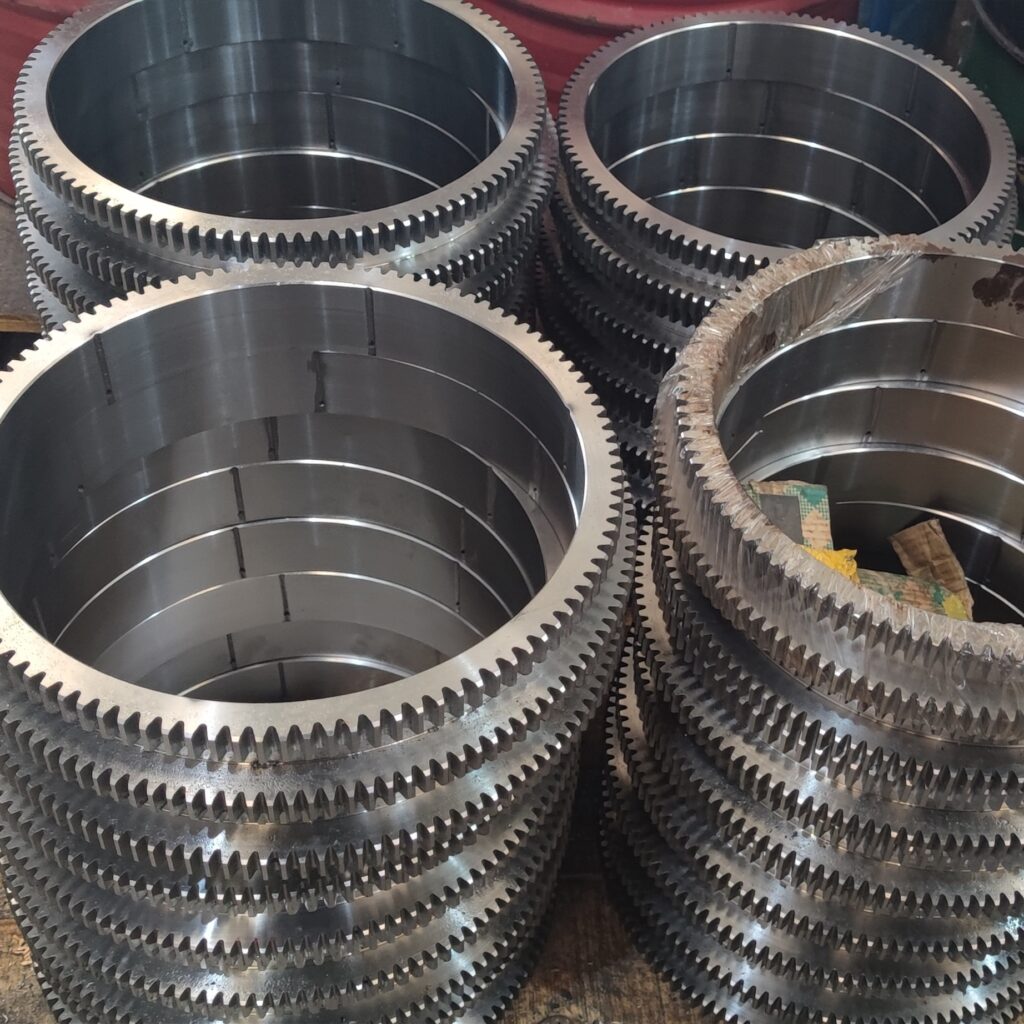
What Happens If You Choose the Wrong Ring Gear Manufacturing Process?
Choosing the wrong ring gear manufacturing process does more than inflate costs—it can make your part geometrically impossible to finish after heat treatment. When an entire production batch is scrapped at the final machining stage, the financial and scheduling damage multiplies quickly. Before you request a quote, four factors should drive your decision.
Geometry Rules Everything Internal ring gears with a diameter-to-bore ratio below 1.3:1 cannot be hobbed—the cutting tool physically cannot reach the tooth flanks. In these cases, you are limited to gear shaping or broaching. Measure the geometry first, then shortlist only the processes that can actually access the teeth. This single check eliminates the most common quoting errors.
Heat Treatment Dictates Sequence Planning to carburize your ring gear to 58+ HRC? Then you cannot broach afterward. Broaching cuts soft steel; once hardened, the teeth will destroy the broach tool and the workpiece. The most common failure we see is specifying a machining sequence that is incompatible with the required hardness. As a rule, confirm final hardness and distortion allowance early in the design review, and lock in the heat-treatment specification before committing to any machining route.
Volume Economics Have Clear Breakpoints Production volume determines when expensive tooling makes sense.
- Under 500 units: gear shaping is the economical baseline
- 5,000–10,000 units: broaching justifies $15,000–$50,000 in tooling investment
- 100,000+ units: powder metallurgy becomes a realistic option for suitable designs
Match the process to your annual demand—not to an idealized unit cost.
Fatigue-Critical Applications Need Forging For differential and planetary gears—and any fatigue-critical ring gear—forging is the right starting point. Forged blanks align grain flow along the tooth contour, boosting bending strength by 25–40% compared with machined-from-bar stock. There are no shortcuts when fatigue life is on the line.
Bottom Line There is no single “best” ring gear manufacturing process—only the right match for your geometry, hardness, volume, and fatigue requirements. Ask your manufacturer to walk through these four constraints before quoting. The cheapest quote is often the most expensive one.
Send your drawings to the Eagle Machinery engineering team today for a process recommendation matched to your exact specifications.
ring gear manufacturing
ring gear machining process
gear shaping vs broaching
large ring gear forging
carburized ring gear heat treatment
internal gear hobbing
gear broaching tooling cost
powder metallurgy gears
forged gear fatigue strength
custom ring gear manufacturer