
What Are the Early Warning Signs of Gearbox Sludge Contamination?
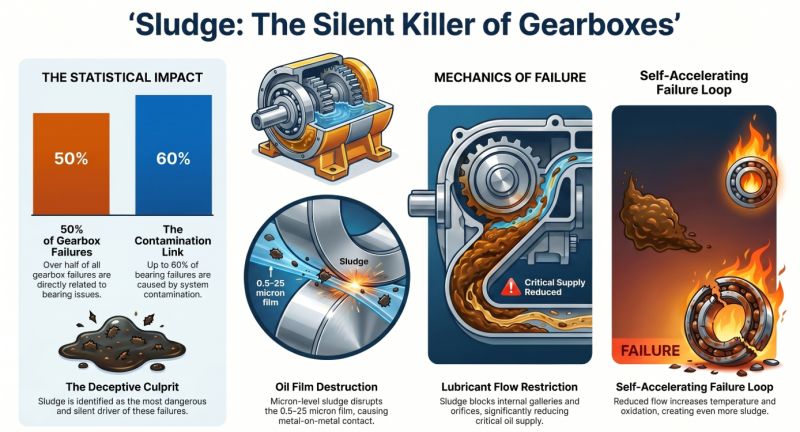
Gearbox failure is one of the costliest issues plaguing industrial machinery, and most breakdowns stem from a silent, overlooked culprit: lubricant sludge. Industry data confirms over 50% of all gearbox failures are bearing-related, with 40–60% of these bearing faults directly tied to oil contamination. Unlike obvious mechanical wear, sludge causes gradual, irreversible damage that cripples gearbox performance long before warning wear metal spikes appear.
The primary danger of gearbox sludge is its ability to destroy critical protective oil films. Industrial bearings depend on a precision 0.5–25 micron lubrication film to separate metal components and eliminate friction. Even tiny micron-level sludge deposits disrupt consistent film formation, shifting full-film lubrication to dangerous metal-on-metal contact. This minor disruption triggers incremental surface damage that escalates rapidly over time.
Sludge also creates a self-accelerating failure cycle by restricting lubricant flow. It clogs oil galleries, orifices and internal passages, reducing vital oil supply to key bearing components. Insufficient lubrication raises operating temperatures, speeds up oil oxidation, and generates more sludge — worsening contamination and wear in a continuous loop.
SKF industry research highlights a critical, overlooked fact: just 30 minutes of operation in heavily contaminated oil can erase nearly 90% of a gearbox’s L10 bearing life. Resulting surface fatigue and micro-cracking are permanent, and even full oil purification cannot reverse existing internal damage.
For industrial asset managers, timely intervention is non-negotiable. Monitoring for early sludge warning signs, rather than waiting for wear metal surges, is the only effective way to preserve gearbox integrity, extend equipment lifespan and avoid unplanned downtime.
#GearboxSludge #BearingFailure #GearboxLubrication #IndustrialEquipmentMaintenance #OilContamination #GearboxFailureCauses #L10BearingLife #IndustrialMachineryWear #LubricantDegradation #AssetMaintenance