
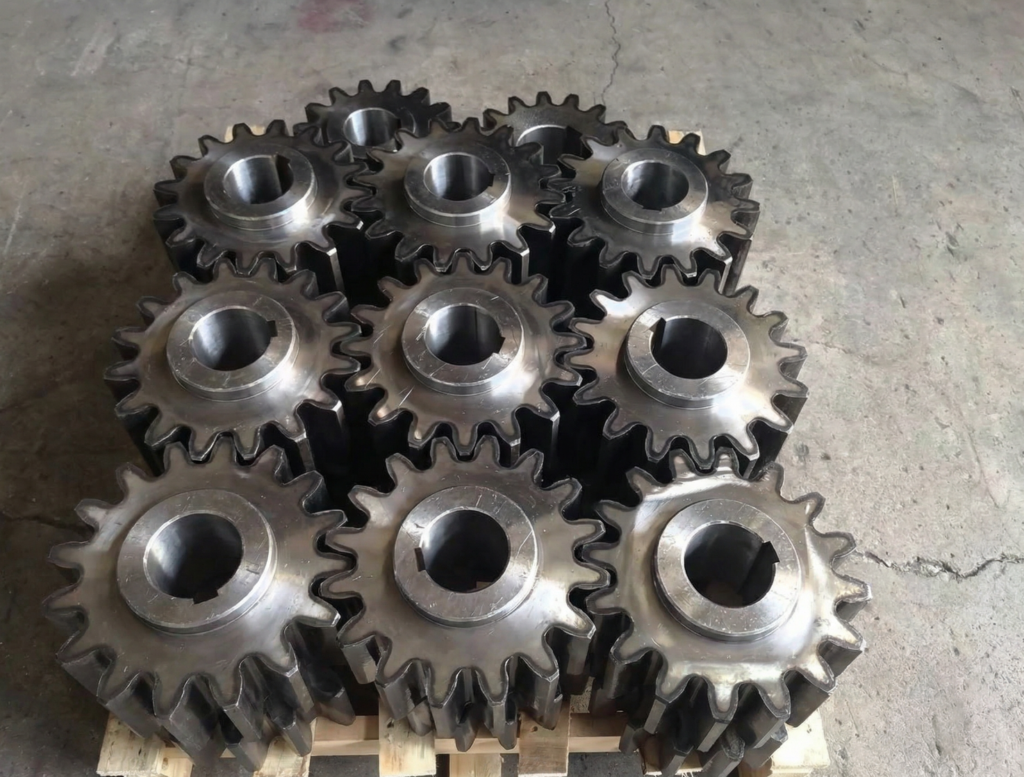
Can a Gear Material Upgrade Alone Lower Friction? A Tribology Reality Check
Think harder gear materials guarantee lower friction? Think again.
Harder gear material, lower friction — it sounds logical, but in real gearboxes the equation rarely holds. Many manufacturers upgrade to high-hardness steels expecting efficiency gains, only to measure zero change in friction or energy loss. The reason is tribology: friction is a system-level phenomenon, not a single-material trait. Understanding that system is the key to actually reducing gear friction.
Hardness ≠ Low Friction
Material hardness does matter — but for the right reasons. It improves wear resistance and fatigue strength, protecting gear teeth from pitting and breakage under heavy load. However, under full-film lubrication, mating surfaces are fully separated by a pressurized oil film. In that regime, friction is controlled by the lubricant’s shear properties, not by the metal beneath it. A harder gear simply does not automatically translate into a lower-friction gear.
Texture Beats Smoothness
Surface finish also tells a more nuanced story than “smoother is better.” Excessively polished tooth flanks may struggle to retain lubricant, especially during start-up and low-speed operation. Functional surface topography — controlled micro-texture and oil-retaining grooves — holds the lubricant on the tooth flank and prevents direct metal-to-metal contact under boundary-lubrication conditions. The goal is the right texture, not just the smoothest one.
Lubrication Is the Real Boss
At typical high-speed operation, gear friction is governed by the pressurized lubricant film between meshing teeth. Temperature and viscosity matter far more than the substrate material. The wrong oil grade, degraded additives, or an overheated gearbox will raise friction even on a flawless, high-hardness gear.
Engineer the Whole Tribological System
To genuinely reduce gear friction, stop isolating variables. Treat material selection, surface engineering and coatings, and lubricant choice as one integrated system: match the gear material to your load and fatigue requirements, design surface topography for oil retention, and select viscosity and additives for your speed and temperature range.
Have you ever upgraded gear materials and seen zero change in efficiency? You are not alone — the missing piece was usually the system, not the steel. Ready to engineer friction out of your gears? Contact our engineering team for a free, tribology-driven gear design review.
gear friction · gear materials · gear lubrication · tribology · surface texture · lubricant viscosity · gear wear resistance · gearbox efficiency · gear design · reduce gear friction