
Helix Hand, Rotation & Thrust: Critical Helical Gear Design Considerations
Why “Right‑Hand” or “Left‑Hand” alone cannot define thrust direction for helical gears.
Many engineers simplify helix hand as a basic meshing rule, yet it is a system‑level choice that directly impacts bearing service life and drivetrain reliability.
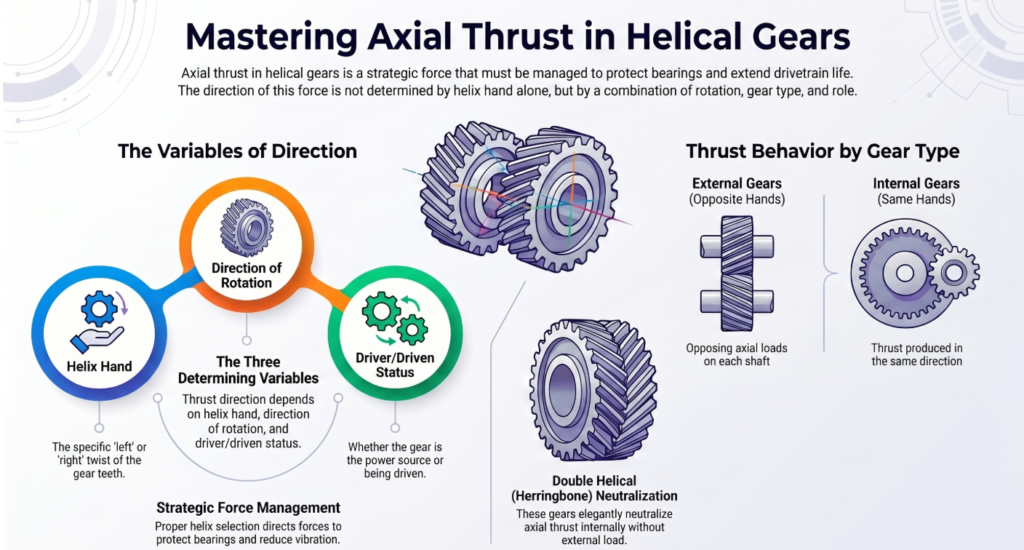
Axial thrust direction relies on three key factors: helix hand, rotation direction, and driving‑driven gear status.
For external parallel helical gears with opposite hands, each shaft generates opposite axial loads instead of load cancellation. Internal gears of identical helix hands produce thrust toward the same direction. Double‑helical herringbone gears effectively counteract internal thrust forces.
Proper helix selection focuses on force management. Correctly directing axial thrust protects bearings, cuts vibration and extends the whole transmission system service life. Misjudged thrust will cause premature bearing failure and unexpected downtime.
HelicalGears #GearDesign #MechanicalEngineering #PowerTransmission #Gearbox