Uncategorized

changsha ealge machinery internal gear systems

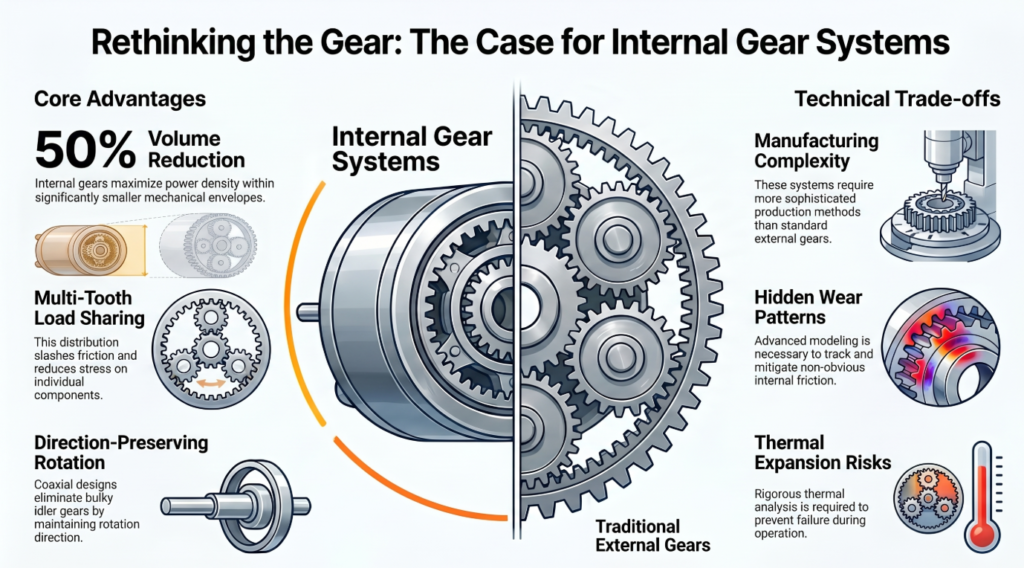
What Are the Key Trade‑Offs of Using Internal Gears for High‑Performance Drivetrain Systems?

External spur and helical gears remain the mainstream industry standard for most transmission projects. Even so, internal gear setups are powering cutting‑edge modern hardware, ranging from electric vehicle hub motors to high‑load robotic joints. Well‑optimized internal gear assemblies can deliver up to 50 % reduction in overall system volume compared with equivalent external‑gear drivetrains, making them […]
What Are the Key Trade‑Offs of Using Internal Gears for High‑Performance Drivetrain Systems? Read More »

helical vs spur gear meshing geometry comparison

How Do Helical Gears Compare to Spur Gears in High-Velocity, High-Load Applications?

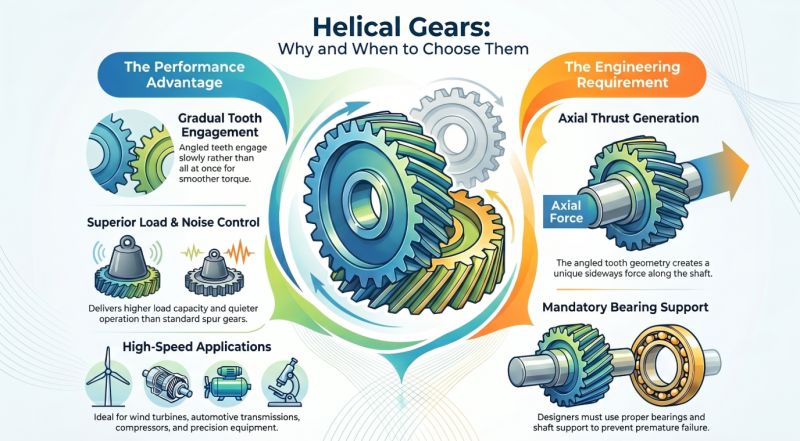
Helical vs. Spur Gears: Which Geometry Optimizes Torsional Vibration and Load Distribution? Selecting the right gear type is critical for mechanical system performance, service life, and operational noise. Many engineers face a common decision: helical gears or spur gears. Understanding their core differences helps you pick the optimal solution for your industrial equipment. Helical gears

How Do Helical Gears Compare to Spur Gears in High-Velocity, High-Load Applications? Read More »

Bevel gear structure and industrial power transmission working principle comparison

Bevel Gears: Are They Still the Right Choice for Modern Mechanical Design?

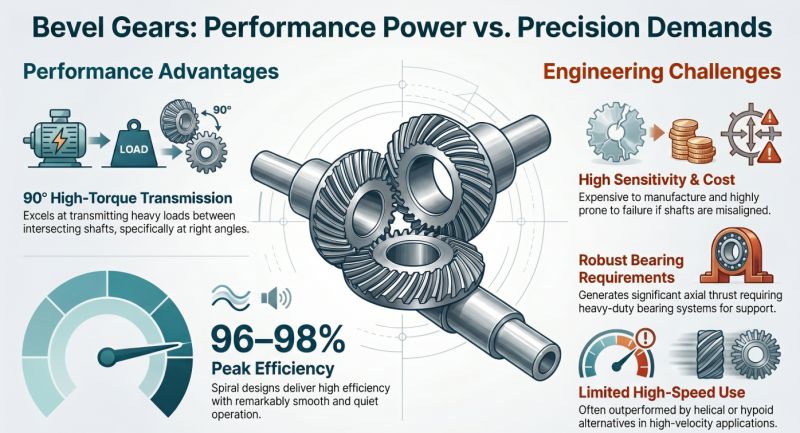
Bevel Gear Pros and Cons: When to Use (and Avoid) This Traditional Gear Bevel gears have long served as a traditional staple in power transmission systems, yet modern mechanical designers constantly question whether they remain the optimal solution for contemporary applications. Renowned for transmitting high torque between intersecting shafts—most commonly 90-degree configurations—bevel gears are irreplaceable

Bevel Gears: Are They Still the Right Choice for Modern Mechanical Design? Read More »

wastewater gearbox premature failure causes solution

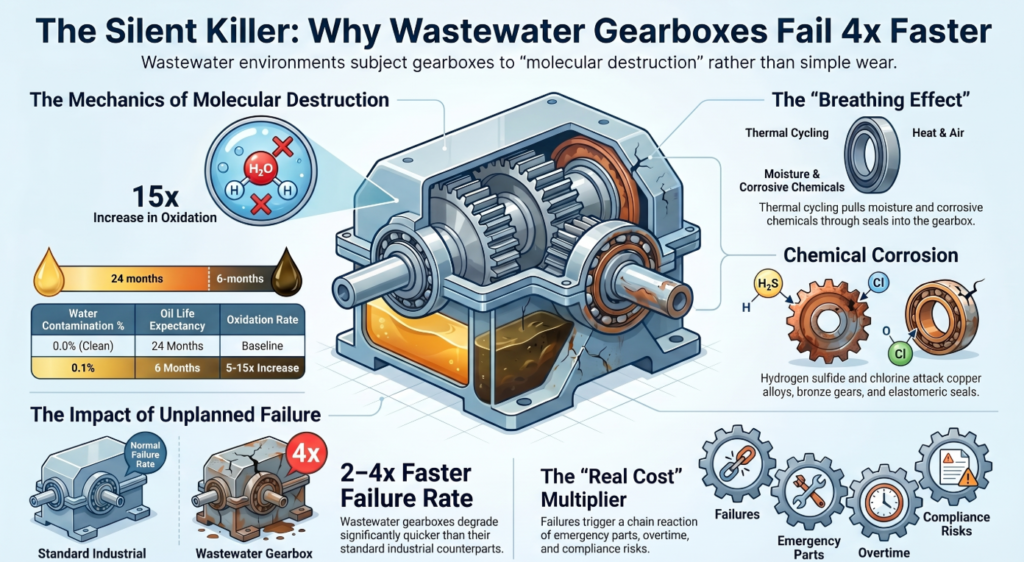
Why Wastewater Gearboxes Fail 2–4x Faster & How To Stop Premature Failure

Industrial Lubrication Tips to Extend Wastewater Gearbox Service Life Wastewater gearboxes consistently fail 2 to 4 times faster than standard industrial gearboxes, and simple oil dilution is not the core cause—persistent molecular-level component destruction driven by harsh wastewater operating environments is the key culprit. This premature equipment failure plagues most wastewater treatment facilities, causing unplanned

Why Wastewater Gearboxes Fail 2–4x Faster & How To Stop Premature Failure Read More »

rotating equipment lubrication reliability

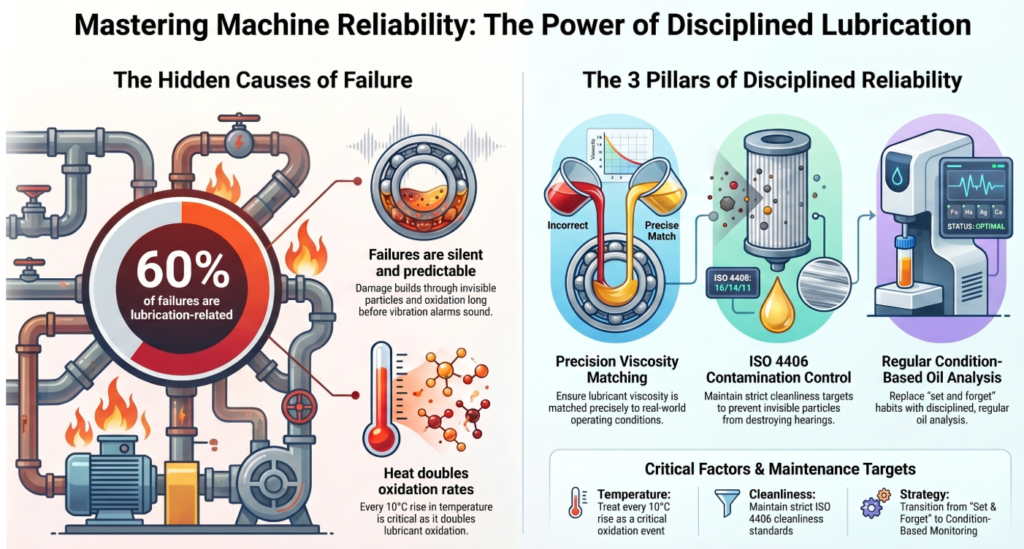
Why 60% of Rotating Equipment Failures Are Predictable

Equipment Reliability: Stop Random Breakdowns With Smart Lubrication Practices Most industrial rotating equipment failures are not random accidents—they are predictable, preventable issues rooted in poor lubrication and contamination control. Industry data confirms over 60% of rotating machinery breakdowns stem from subpar lubrication management, one of the most overlooked threats to manufacturing operational reliability. Unlike sudden

Why 60% of Rotating Equipment Failures Are Predictable Read More »

worm gears vs bevel gears right angle power transmission

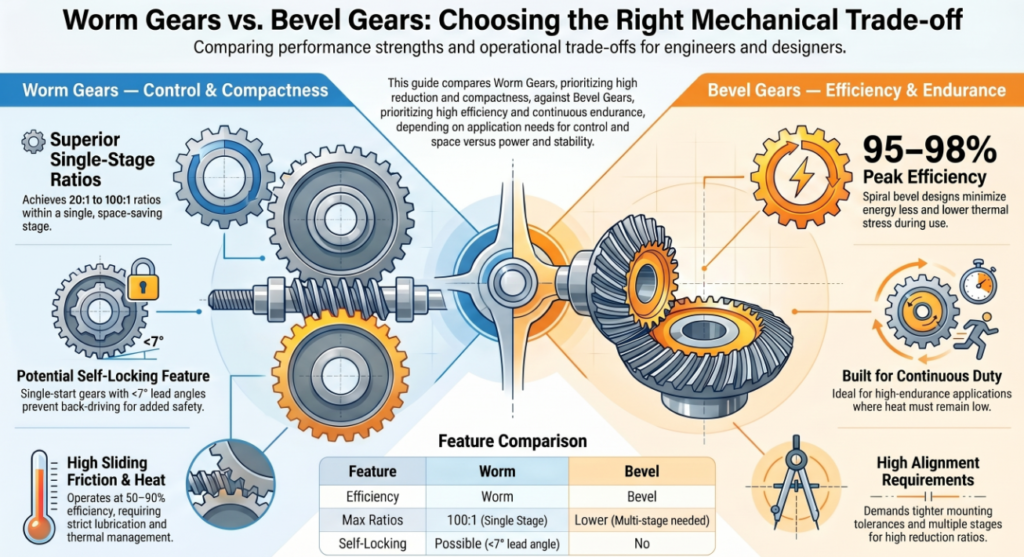
Worm Gears vs. Bevel Gears: Key Trade-Offs for Right-Angle Power Transmission Selection

The Right-Angle Gear Dilemma: Worm vs. Bevel—Which Trade-Off Wins? Worm Gears vs. Bevel Gears: Which Trade-Off Are You Willing to Make?In right-angle power transmission, the question isn’t “Which is better?” — it’s “What compromise fits your application?” Here’s how I evaluate it: Worm Gears — Control & Compactness Best when you need:   – High single-stage

Worm Gears vs. Bevel Gears: Key Trade-Offs for Right-Angle Power Transmission Selection Read More »