News

Custom industrial gear news, girth gear, pinion shaft, spur gear, helical gear solutions for cement, mining and construction machinery

Industrial gearbox sludge contamination damaging bearing lubrication film

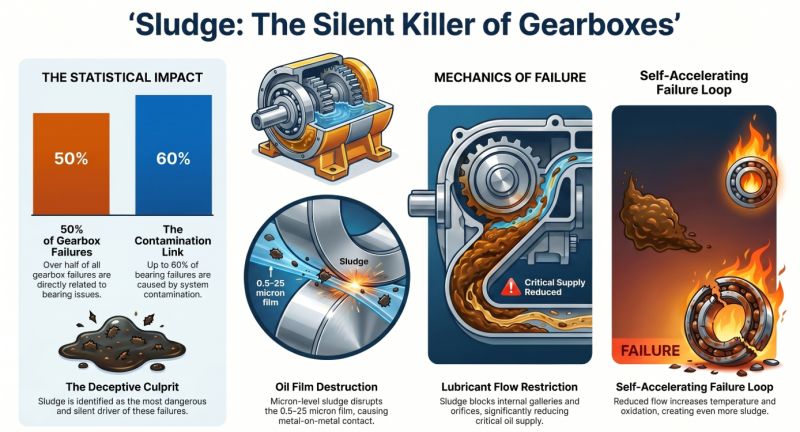
What Causes Premature Gearbox Bearing Failure in Industrial Equipment?

Gearbox failure is one of the costliest issues plaguing industrial machinery, and most breakdowns stem from a silent, overlooked culprit: lubricant sludge. Industry data confirms over 50% of all gearbox failures are bearing-related, with 40–60% of these bearing faults directly tied to oil contamination. Unlike obvious mechanical wear, sludge causes gradual, irreversible damage that cripples […]

What Causes Premature Gearbox Bearing Failure in Industrial Equipment? Read More »
industrial gearbox flush process contaminated oil maintenance

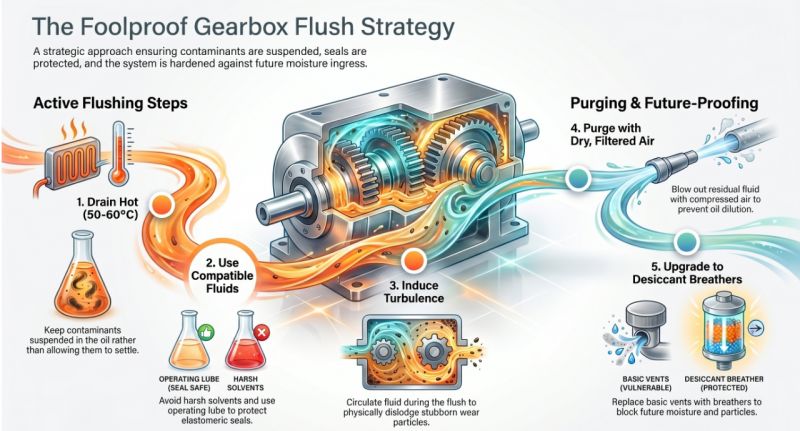
What Steps Extend Gearbox Lifespan After Severe Oil Contamination?

Gearbox oil contamination is a leading cause of industrial equipment wear, sudden breakdowns, and costly unplanned downtime. Most routine maintenance only includes a basic oil drain, which cannot eliminate microscopic wear particles, settled debris, and residual moisture inside heavily contaminated gearboxes. Leaving hidden contaminants in place will quickly ruin fresh gearbox oil, compromise gear and

What Steps Extend Gearbox Lifespan After Severe Oil Contamination? Read More »

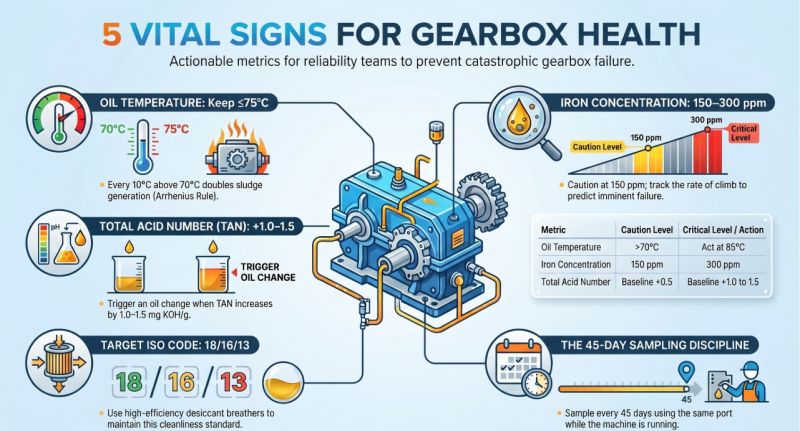
heavy machinery gearbox predictive maintenance metrics

How to Extend Heavy Machinery Gearbox Lifespan Beyond 10 Years?

First, consistent gearbox oil temperature control is foundational. Operators must maintain operating temperatures at or below 75°C and initiate immediate maintenance at 85°C. Following the Arrhenius Rule, every 10°C temperature rise above 70°C doubles sludge formation, accelerating component wear and lubricant degradation. Second, iron concentration levels indicate internal gear and bearing wear. Set a 150

How to Extend Heavy Machinery Gearbox Lifespan Beyond 10 Years? Read More »

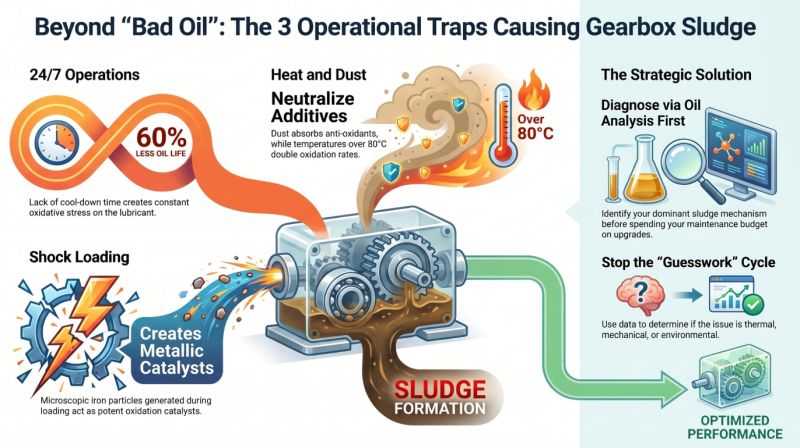
Why Does Heavy Machinery Gearbox Sludge Keep Forming?

How Do You Diagnose and Prevent Sludge Build‑Up in Heavy Machinery Gearboxes?

Many heavy‑equipment operators and maintenance teams struggle with persistent gearbox sludge, mistakenly blaming poor‑quality lubricant as the main culprit. In most real‑world field cases, sludge formation is seldom caused solely by “bad oil”. Instead, it stems from four common operational traps that accelerate lubricant degradation inside heavy‑machinery gearboxes. First, non‑stop 24/7 operation leaves zero cool‑down

How Do You Diagnose and Prevent Sludge Build‑Up in Heavy Machinery Gearboxes? Read More »

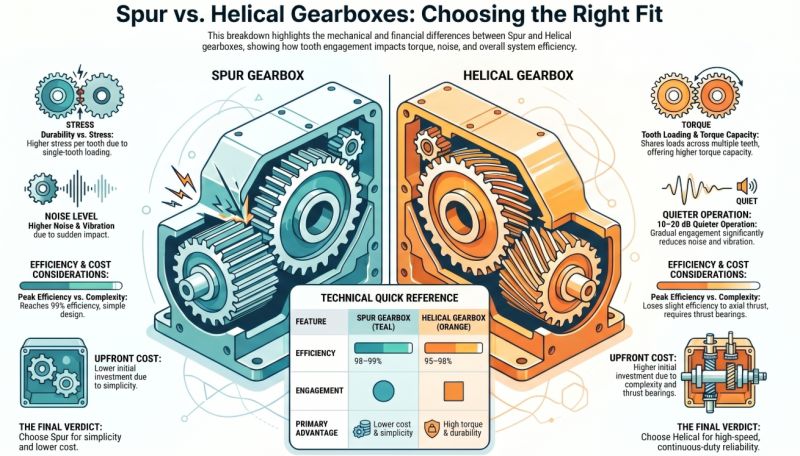
spur‑vs‑helical‑gearbox‑comparison‑industrial‑power‑transmission

What Is the Difference Between Spur and Helical Gearboxes for Heavy‑Duty Operations?

Selecting the right gearbox directly impacts equipment lifespan, operating noise, energy efficiency, and total project cost. Many industrial buyers struggle to decide between spur gearboxes and helical gearboxes for their power‑transmission projects. Understanding real‑world performance differences helps you avoid over‑specification or premature component failure. When evaluating load capacity and durability, core design differences create distinct

What Is the Difference Between Spur and Helical Gearboxes for Heavy‑Duty Operations? Read More »

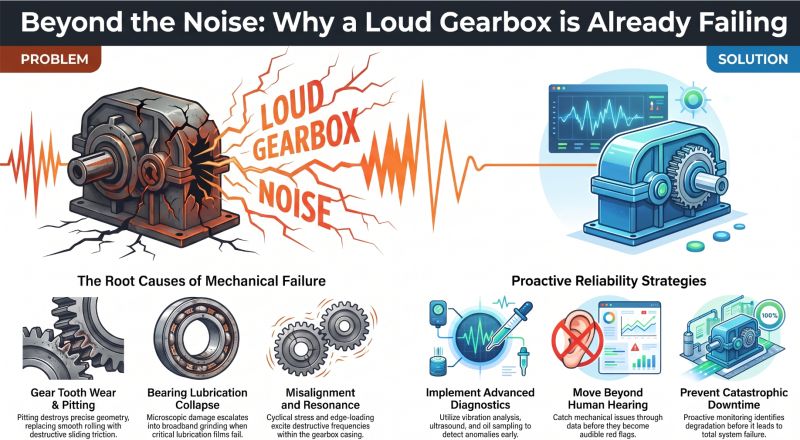
gearbox‑failure‑warning‑abnormal‑noise‑predictive‑maintenance

How to Detect Gearbox Failures Before You Hear Unusual Gearbox Sounds?

Why Is My Gearbox Making Loud Noises? What Does Gearbox Noise Actually Mean? A noisy, louder‑than‑usual gearbox is far more than a simple workplace nuisance — it serves as a critical warning sign of underlying mechanical trouble. Many equipment operators treat unusual gearbox sound as a minor inconvenience, yet once abnormal noise becomes audible to

How to Detect Gearbox Failures Before You Hear Unusual Gearbox Sounds? Read More »

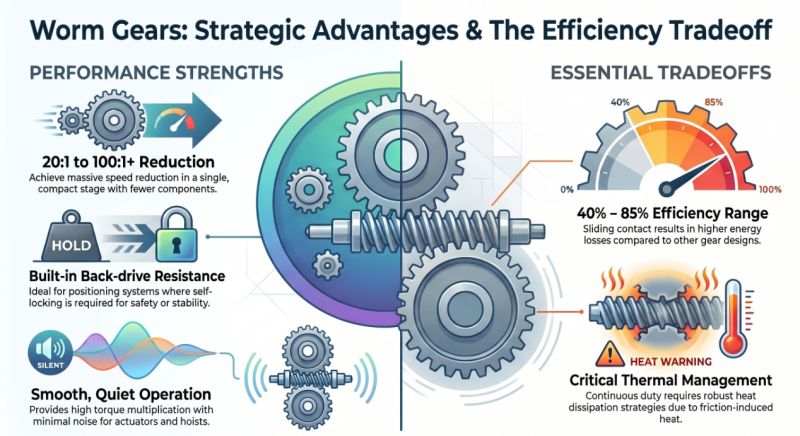
worm gear advantages high reduction self locking drive system

Why Choose a Worm Gear Over Other Gear Types? A Practical Guide

When Is a Worm Gear Actually the Best Solution? Worm gears are often dismissed for their lower efficiency, but in many industrial applications, they remain the smartest engineering choice. The key is knowing when system simplicity and control outweigh raw efficiency. High Reduction in One Compact Stage A single worm gear set can deliver reduction

Why Choose a Worm Gear Over Other Gear Types? A Practical Guide Read More »

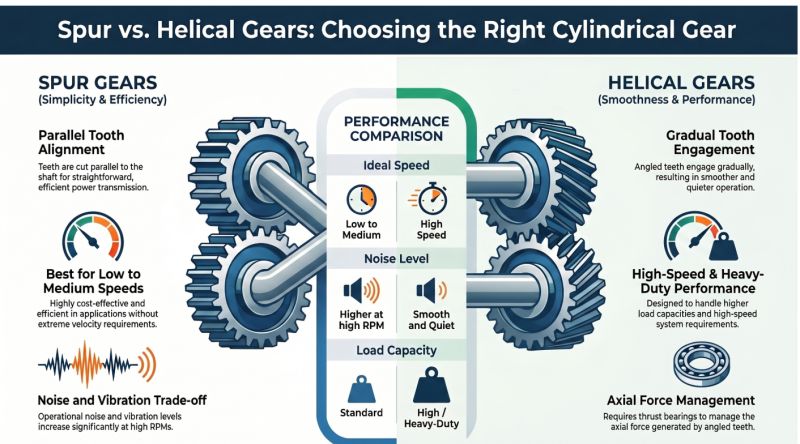
spur‑vs‑helical‑cylindrical‑gear‑comparison

Spur vs Helical Cylindrical Gears: How to Pick the Right Gear for Parallel‑Shaft Applications

Cylindrical gears are the core power‑transmission component for nearly all parallel‑shaft industrial systems, yet overall equipment performance heavily relies on correct gear geometry selection. Mis‑matched gear choices often lead to excessive noise, premature wear, vibration failure and unexpected downtime. Spur gears feature teeth running parallel to the mounting shaft. This straightforward design delivers high efficiency

Spur vs Helical Cylindrical Gears: How to Pick the Right Gear for Parallel‑Shaft Applications Read More »

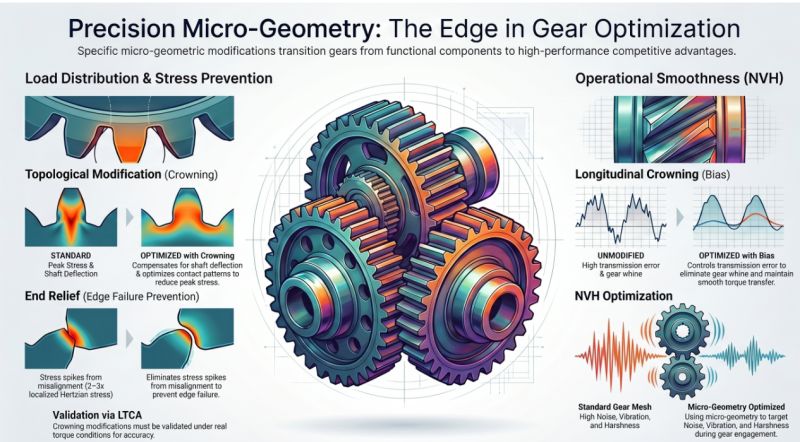
gear topological crowning load optimization

High-Precision Gear Micro-Geometry: The Hidden Competitive Edge for Industrial Gear Systems

Standard gears deliver basic functionality, while micro-geometry optimized gears create lasting market competitiveness. For industrial gear systems, the core gap between theoretical design and real-world field reliability lies in precision micro-geometry tuning, which defines gear durability, load capacity, and NVH performance. Professional micro-geometry optimization covers three core high-performance modifications for premium gear operation. First, topological

High-Precision Gear Micro-Geometry: The Hidden Competitive Edge for Industrial Gear Systems Read More »

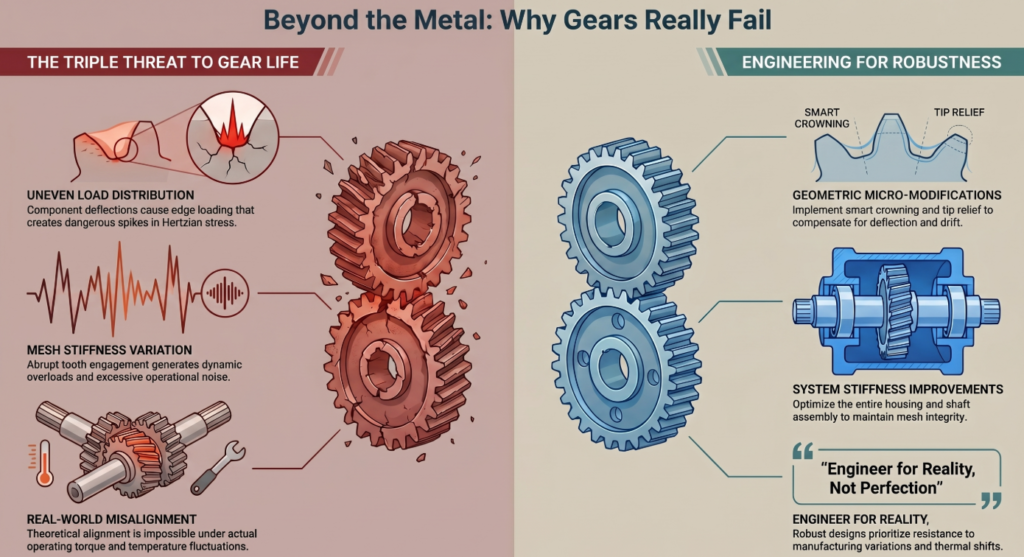
gear‑mesh‑stress‑distribution‑industrial

Gear Mesh Factors: Root Causes of Unexpected Gear Failures

Why Do Gears Fail Prematurely Even With Good‑Quality Steel? Most gear failures happen long before the base material reaches its limit. Poor steel strength is rarely the culprit. Instead, real‑world operating conditions‑misalignment, component deflection, and improper lubrication‑generate local stresses exceeding original design expectations. Three underestimated mesh factors trigger most premature gear damage:1. Load Distribution: Deflection leads

Gear Mesh Factors: Root Causes of Unexpected Gear Failures Read More »