News

Custom industrial gear news, girth gear, pinion shaft, spur gear, helical gear solutions for cement, mining and construction machinery

helical‑gear‑axial‑thrust‑design

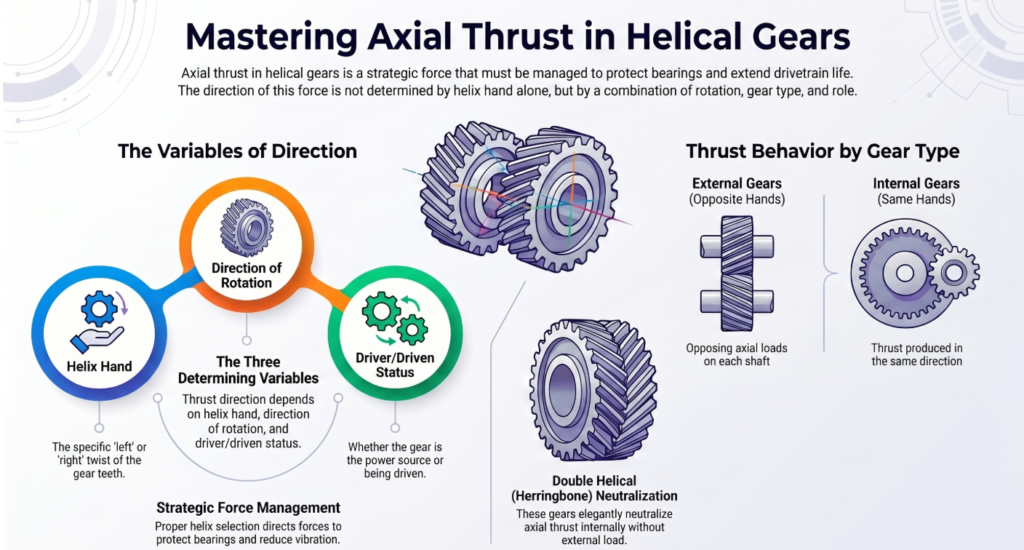
Helical Gears: Why Helix Hand Alone Cannot Predict Axial Thrust

Helix Hand, Rotation & Thrust: Critical Helical Gear Design Considerations Why “Right‑Hand” or “Left‑Hand” alone cannot define thrust direction for helical gears. Many engineers simplify helix hand as a basic meshing rule, yet it is a system‑level choice that directly impacts bearing service life and drivetrain reliability. Axial thrust direction relies on three key factors: […]

Helical Gears: Why Helix Hand Alone Cannot Predict Axial Thrust Read More »
gearbox efficiency lifecycle performance

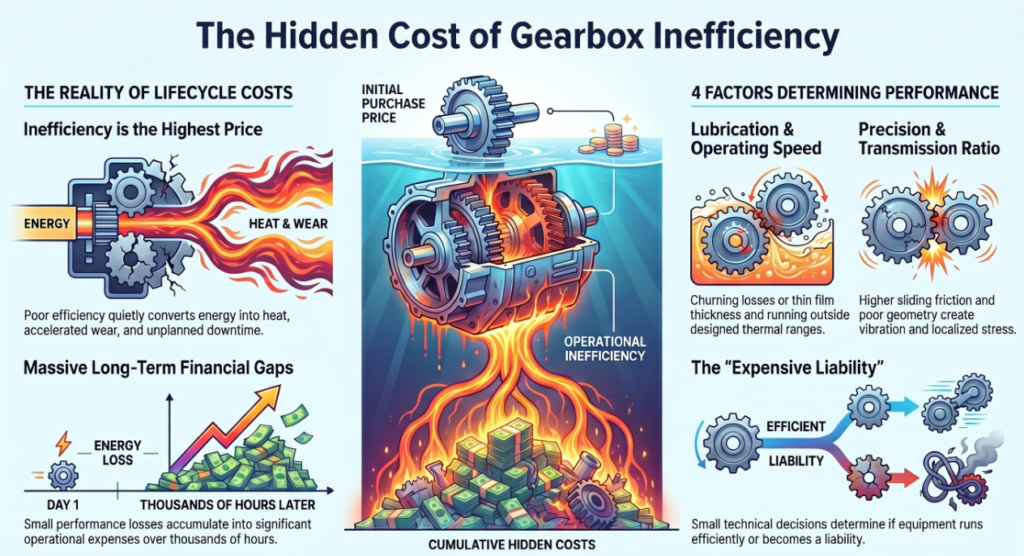
True Gearbox Cost: Efficiency Loss Trumps Initial Purchase Price

Why Inefficient Gearboxes Are Your Factory’s Costliest Equipment What if the costliest gearbox in your facility is not the one with the highest upfront price?Gearboxes operating under rated efficiency waste energy as heat, speeding up component wear and triggering unexpected downtime. Tiny efficiency gaps accumulate over thousands of operating hours, resulting in substantial long-term expenditure.

True Gearbox Cost: Efficiency Loss Trumps Initial Purchase Price Read More »

ring gear high torque power transmission

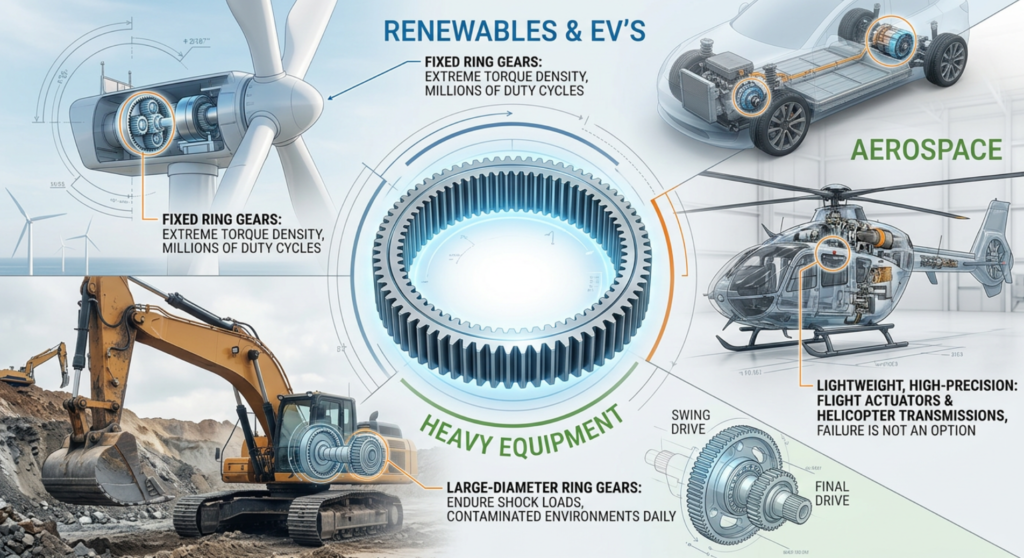
The Underestimated Ring Gear: Key to High-Torque System Longevity

Critical Role of Precision Ring Gears in Heavy-Duty Power Transmission Many engineers focus on planetary and sun gears, yet the ring gear largely defines the torque capacity, load sharing and service life of power transmission systems. Poorly manufactured ring gears trigger vibration, accelerated abrasion and sudden breakdowns. Precision ring gears serve wide industries: renewable energy

The Underestimated Ring Gear: Key to High-Torque System Longevity Read More »

conveyor gearbox selection parallel worm helical bevel planetary

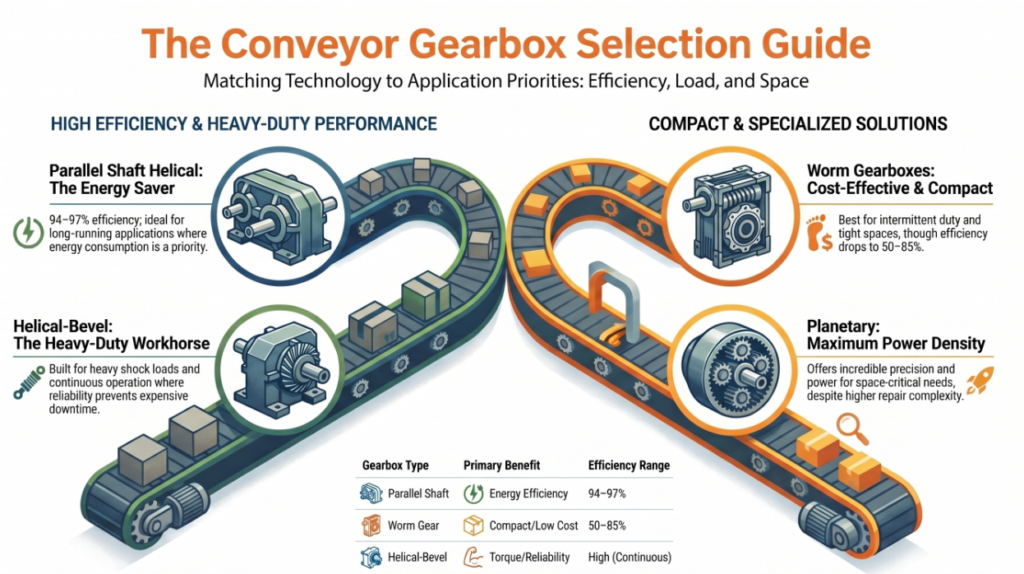
How to Select the Correct Gearbox for Conveyor Systems

Parallel Shaft, Worm, Helical-Bevel or Planetary? Match Gearbox Design to Your Working Conditions Choosing the right gearbox for your conveyor isn’t about picking the “best” one — it’s about selecting the most suitable unit for your operating conditions. After optimizing drive systems across mining, aggregate, and manufacturing plants, here’s my practical breakdown: The real skill

How to Select the Correct Gearbox for Conveyor Systems Read More »

heavy equipment lubrication worm open gear grease

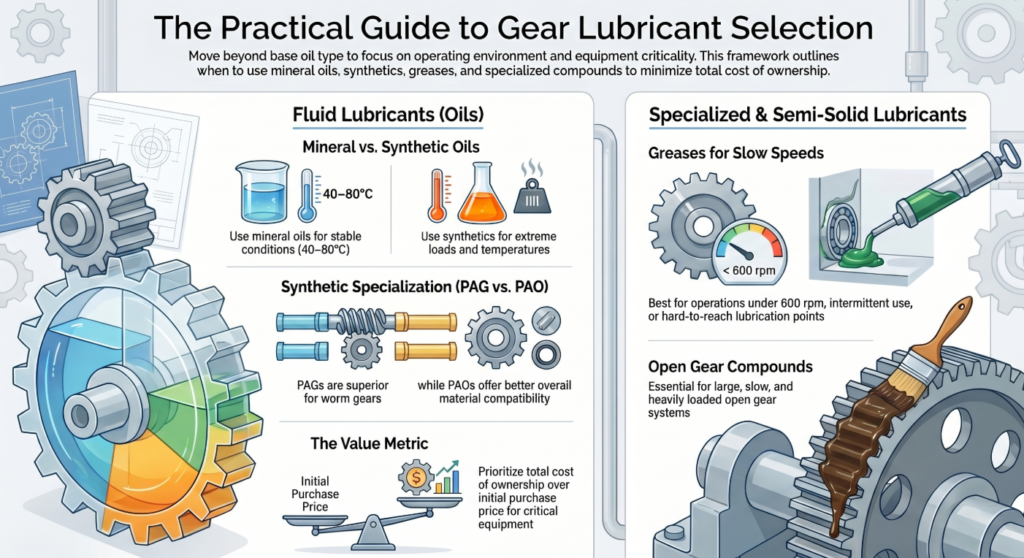
Gear Lubricant Selection: Stop Only Focusing on Base Oil Type — Viscosity, Additives & Working Conditions Come First

Heavy Machinery Lubrication: Is Base Oil the Wrong Primary Factor When Choosing Gear Oil? Many equipment operators still select gear lubricants primarily based on base oil classification.Years of field experience maintaining heavy machinery shows viscosity grade, EP/AW extreme pressure & anti-wear additives, and actual operating conditions are significantly more critical than simply choosing mineral oil

Gear Lubricant Selection: Stop Only Focusing on Base Oil Type — Viscosity, Additives & Working Conditions Come First Read More »

spur gearbox vs helical gearbox comparison industrial drive system.

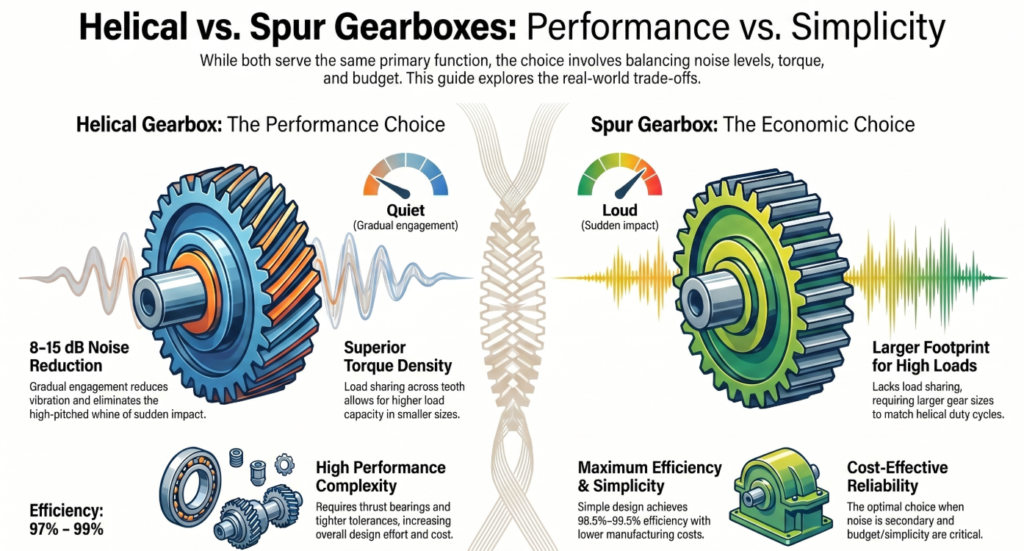
Spur Gearbox vs Helical Gearbox: How to Pick the Right Gear Reducer for Your Industrial Drive Application

Spur or Helical Gearbox? Stop Overcomplicating Your Industrial Drive System Selection After optimizing drive systems for heavy industrial equipment over many projects, one truth stands out: the practical difference between spur and helical gearboxes lies not in textbook theory, but in real-world working conditions. Below are the core practical factors you need to evaluate when

Spur Gearbox vs Helical Gearbox: How to Pick the Right Gear Reducer for Your Industrial Drive Application Read More »

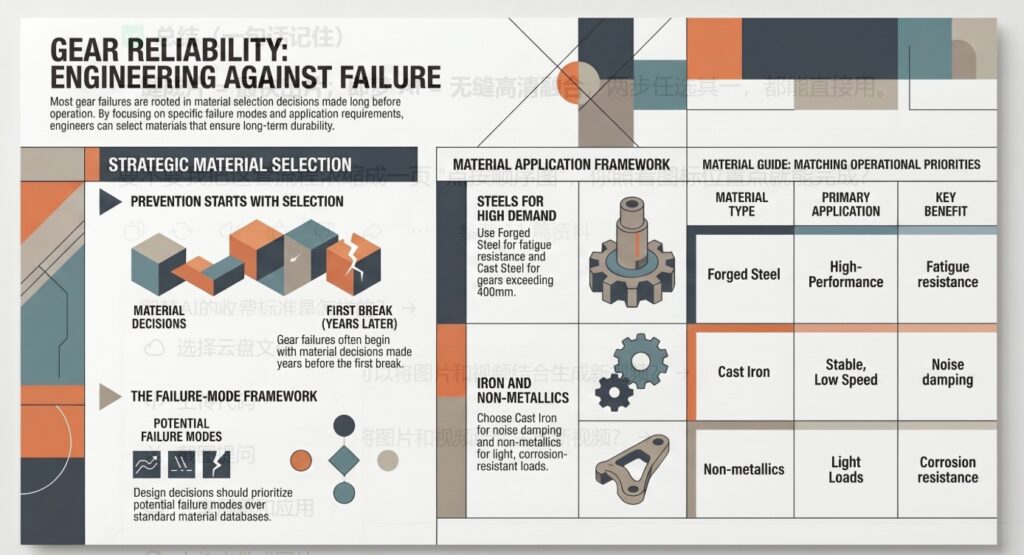
gear material selection avoid premature gear failure

Gear Failures Often Stem From Poor Early Material Selection

Optimize gear reliability by designing around failure modes instead of simple material catalog lookup Most gear failures originate far earlier than tooth breakage, often rooted in outdated specs and cost tradeoffs during material selection.Instead of browsing material databases, design around anticipated failure modes.Forged steel, cast steel, cast iron and non-metallics suit distinct load, size and

Gear Failures Often Stem From Poor Early Material Selection Read More »

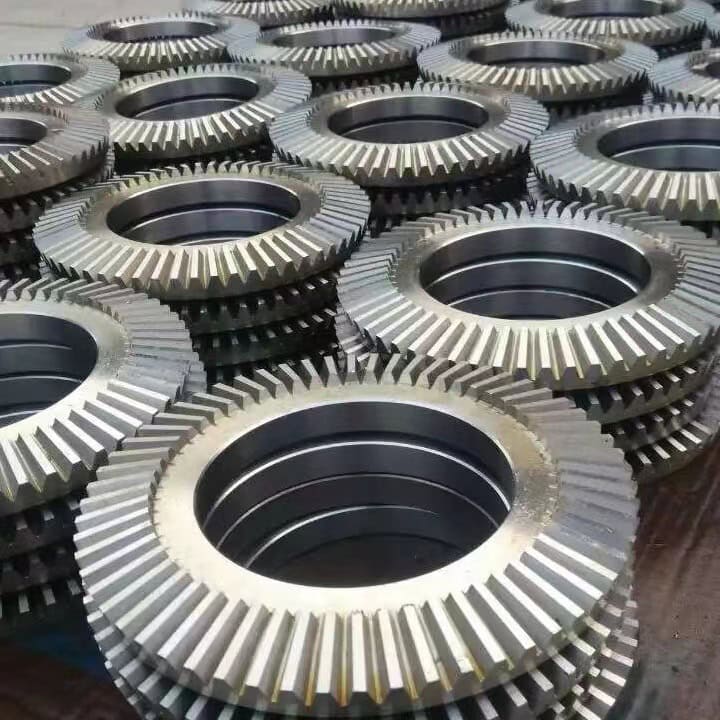
Mass production straight bevel gears alloy steel heavy load bevel gear for heavy machinery transmission reducer, custom modulus straight bevel gear factory

Bevel Gears: Ideal High-Torque Transmission For Intersecting Industrial Shafts

Bevel gears excel at high-torque power transmission between intersecting 90° shafts. Spiral bevel gears reach 96–98% efficiency with smooth, low-noise running.Yet they cost more to produce and are sensitive to misalignment, creating heavy axial thrust that requires heavy-duty bearings, unsuitable for many high-speed scenarios.Choose bevel gears only when layout demands outweigh cost and complexity; full

Bevel Gears: Ideal High-Torque Transmission For Intersecting Industrial Shafts Read More »

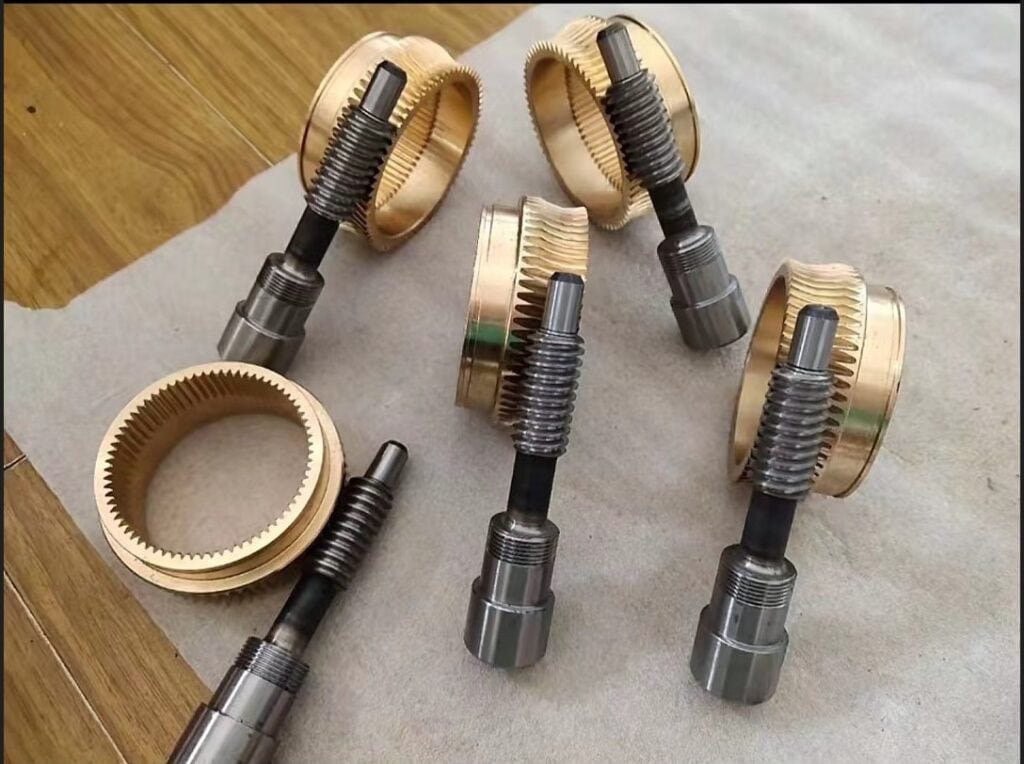
Custom bronze worm gear and alloy steel worm shaft set for worm gear reducer, self-locking worm gear pair for lifting, mining and metallurgical equipment

When Worm Gear Is The Optimal Industrial Transmission Solution

Worm gears stand out for compact transmission, not maximum efficiency. They deliver 20:1–100:1 high reduction within one stage, cutting component count and shortening drive systems.With inherent anti-backdrive and optional self-locking performance, they fit positioning devices, hoists and actuators, offering smooth, low-noise torque output.Sliding tooth contact causes lower efficiency (40%–85%), requiring strict heat control for continuous

When Worm Gear Is The Optimal Industrial Transmission Solution Read More »

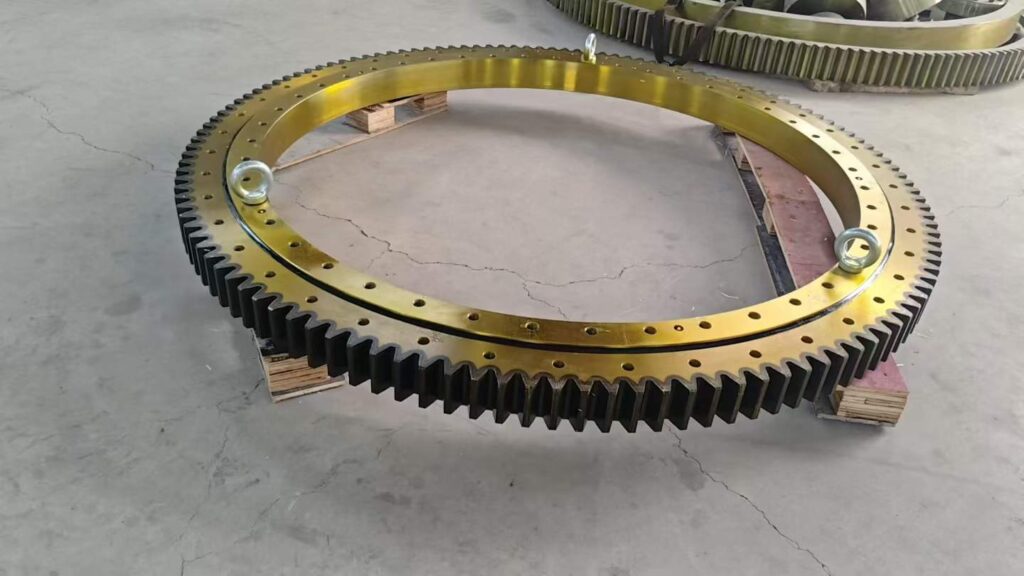
Custom precision alloy steel ring gears internal gear ring for ball mill rotary kiln heavy equipment transmission, CNC machined large ring gear factory from China

Gear Backlash: Key Design Parameter Not A Defect For Industrial Gear Transmission

Gear backlash is a vital design parameter instead of a defect; only reasonable controlled backlash is required instead of full elimination.Proper backlash ensures lubrication film, absorbs thermal expansion, offsets assembly deviation and relieves load deformation. Excessive backlash causes positioning error, vibration and extra dynamic loads, damaging precision transmission.Engineers configure backlash based on load, speed, temperature

Gear Backlash: Key Design Parameter Not A Defect For Industrial Gear Transmission Read More »